


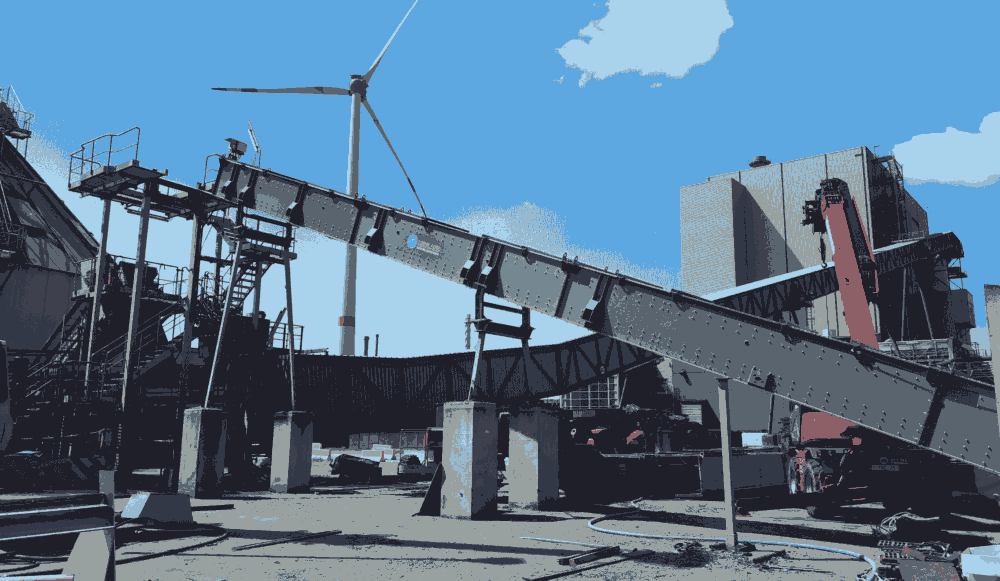
A well-functioning production process depends on many factors. Your internal bulk transport plays an essential role in this. Moving significant amounts of raw materials, semi-finished and finished products within the plant requires a structured and effective system. By investing in internal bulk transport, you can not only increase productivity, but also save costs and ensure the safety of your employees. You can read why here.
What do we mean by internal bulk transport?
We talk about internal bulk transport when large quantities of bulk goods need to be moved within a single plant. Examples include raw materials such as grain, sand, potatoes and other finished products. Transport methods in your factory can range from conveyors, screw conveyors, elevators, chain conveyors to mobile weighers.
Efficient internal bulk transport is a system that perfectly suits your needs, your factory and your product. Indeed, some products require very specific handling because the risk of product backflow is too high. Therefore, always seek advice from an expert to determine with you which devices your factory and your product needs in order to get from point A to point B as efficiently as possible.
What are the biggest pluses of internal bulk transportation?
The implementation of a well-organized internal bulk transport system offers numerous advantages that contribute directly to the success of your production process. We list the most important benefits of a customized internal bulk transport system for you:
- Increased efficiency – A good internal bulk conveying system, tailored to your needs, can significantly reduce lead times within your production process. By moving materials quickly and effectively, you minimize downtime and possible delays. Thus, you create increased production capacity.
- Cost-saving – The more efficient your internal bulk transport runs, the more costs you can save in the long run. Thanks to the necessary automation, your entire production is closely coordinated, which also reduces the error rate. Fewer errors, less downtime and less energy wasted.
- Increased Safety – Safety is a top priority in any production process, and that both for your employees and the users of your product. An automated and well-managed system contributes to a safe working environment.
Applications of internal bulk transport in your factory
When we talk about internal bulk transport, we are not talking about one specific machine, but about numerous transport systems. Depending on your product, the available space and your needs, we determine how we can take care of your internal bulk transport.
Transport screws
Conveyor screws help move loose materials such as sand and grains within your plant. A rotating screw shaft within a tube or trough efficiently transports materials. The closed system protects your bulk materials from dust and contamination. Their compact design makes them space-saving and suitable for various production setups.
They are known for their reliability and require little maintenance. It ensures continuous transport without interruptions. They can be installed flexibly, making them suitable for horizontal, inclined and vertical applications.
Conveyors
Conveyors play their part in a streamlined production process. They are flexibly adaptable and can operate at different angles. This makes them versatile in different types of production environments. Conveyor belts can also save you costs and increase safety in your plant.
Elevators
Vertical transportation has never been easier than with the right elevators in the right places. Elevators are built to move your bulk goods efficiently between different levels.
Elevators allow you to make full use of your production site. Get everything possible out of your plant and lose as little space as possible. You can use standard elevators or elevators specially tailored for your plant.
Chain conveyors
Do you have dry bulk goods to transport in your factory? Then chain conveyors can be a valuable addition to your internal bulk transport. Their ability to carry heavy loads and their flexibility to adapt to complex production lines makes them very interesting.
They offer not only physical strength and stability, but also a strategic solution for optimizing productivity and workflow in modern factory environments.
Packaging machines
Packaging machines are designed to efficiently package large volumes of raw materials, semi-finished and finished products, often in various formats and materials such as bags, cartons or pallets. Their automation not only reduces labor costs, but also optimizes the accuracy and consistency of the packaging process.
Need an efficient internal bulk transport system?
Rely on Meyland to scrutinize and optimize your internal systems. Our engineers advise you on how to make your plant as efficient as possible. In doing so, they take numerous factors into account. Your goal becomes our goal. Together, we take your material handling to the next level.